


Back
Physical and Life Sciences
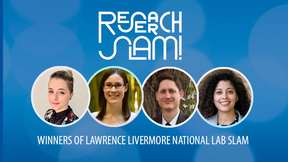
Lawrence Livermore Research Slam! winners advance to Bay Area competition
The top winners of the recent Lawrence Livermore National Laboratory (LLNL) Research Slam!, a speaking competition for postdocs, will advance to the Bay Area Research SLAM set for Thursday, Oct. 28. The Bay Area Research SLAM! is a collaboration between the Bay Area’s national labs (Lawrence Berkeley National Laboratory, LLNL, Sandia National Laboratories and SLAC National…
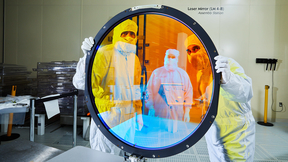
LLNL engineers deliver final optical components for world’s newest telescope: the Vera C. Rubin Observatory
For much of the past decade, Lawrence Livermore National Laboratory (LLNL) researchers have been designing major optical components for the world’s newest telescope, while their industrial partners have fabricated the components. Now, with the September shipment of the last of six optical filters for the telescope’s camera to the SLAC National Accelerator Laboratory in…

Three LLNL scientists honored as APS fellows
Three Lawrence Livermore National Laboratory (LLNL) physicists have been selected as 2021 fellows of the American Physical Society (APS). The new fellows represent a selection of physics expertise, ranging from intense laser-matter interactions and inertial fusion energy science to leading the development of edge simulation models and codes to pioneering new regimes of…
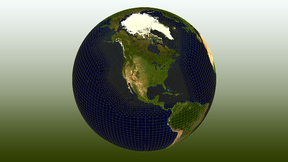
Updated exascale system for earth simulations
A new version of the Energy Exascale Earth System Model (E3SM) is two times faster than its earlier version released in 2018. Earth system models have weather-scale resolution and use advanced computers to simulate aspects of Earth’s variability and anticipate decadal changes that will critically impact the U.S. energy sector in coming years. Version 2 of the Energy…
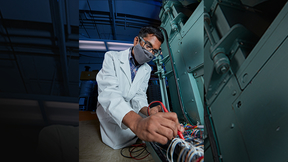
Making it count: Rebuilding infrastructure at the Nuclear Counting Facility
When Daniel Martin put the finishing touches on an autonomous vehicle robot, complete with an ultrasonic sensor to detect and evade obstacles, he knew he wanted to become an engineer. A high school student at the time, he was fascinated by the design and functionality of robots. Fast forward several years, and Martin is now a second-year electrical engineering Ph.D…
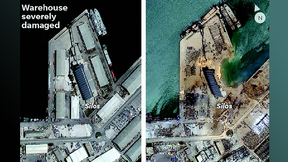
Just how big was the 2020 Beirut explosion?
On Aug. 4, 2020, one of the largest non-nuclear explosions in history pulverized a Beirut port and damaged more than half the city. The explosion resulted from the detonation of tons of ammonium nitrate, a combustible chemical compound commonly used in agriculture as a high-nitrate fertilizer, but which can also be used to manufacture explosives. Since that time, the…
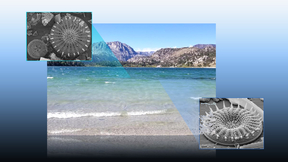
Climate change in the Sierra Nevada has profoundly altered its lake ecosystems
Climate change has significantly impacted the natural systems of the Sierra Nevada, including the mountain lakes that are an iconic part of California’s natural beauty. New research from a Lawrence Livermore National Laboratory (LLNL) scientist and colleagues from the University of Kentucky (UK) and Indiana State University (ISU) shows that lake-sediment cores from a…

Late-time small-body disruptions can protect the Earth
If an asteroid is determined to be on an Earth-impacting trajectory, scientists typically want to stage a deflection, where the asteroid is gently nudged by a relatively small change in velocity, while keeping the bulk of the asteroid together. A kinetic impactor or a standoff nuclear explosion can achieve a deflection. However, if the warning time is too short to stage a…
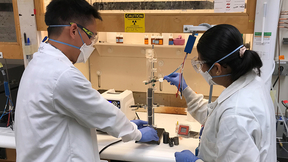
Lab garners five technology commercialization grants
Lawrence Livermore National Laboratory (LLNL) scientists and engineers have posted another banner year securing major grants through the Department of Energy’s (DOE) Technology Commercialization Fund (TCF). “I think the Laboratory did very well again, reflecting a variety of types and approaches to our research and development projects,” said Rich Rankin, the director of…
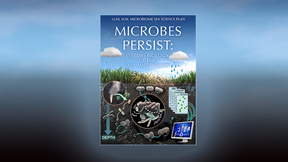
LLNL team wins $15 million to study how microbes affect carbon storage
Do dead microbes control the future of Earth’s climate? A team of researchers led by Lawrence Livermore National Laboratory (LLNL) suspects they might. Using new tools, the team can see which soil organisms are thriving and which are dying in California’s changing climate — and what happens to carbon in their cell biomass when they do. The seven-institution team has just…
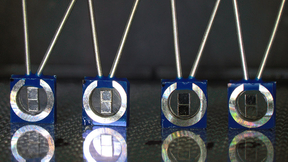
At the extreme: Breaking the ice mold
New research involving Lawrence Livermore National Laboratory (LLNL) scientists shows that water can remain liquid in a metastable state when transitioning from liquid to a dense form of ice at higher pressures than previously measured. Water at extreme conditions has attracted recent attention because of its complex phase diagram, including superionic ice phases having…
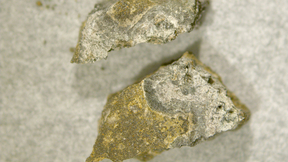
A bigger nursery for the solar system’s first formed solids
The earliest solids formed in the solar system give clues to what radioactive species were made by the young sun, and which ones were inherited. By studying isotopic variations of the elements vanadium (V) and strontium (Sr), an international team of researchers including scientists from Lawrence Livermore National Laboratory (LLNL) found that those variations are not…
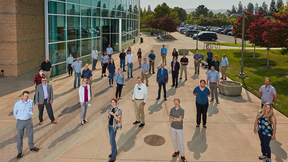
R-cubed: Revolutionizing the present, anticipating the future
The Post-Detonation Rapid Response Research Venture — also known as R-cubed or R3 — is combining basic research and development of emergent technologies, predictive capabilities and systems assessment to revolutionize the speed and flexibility of technical nuclear forensic (TNF) response to nuclear events. The venture is a multi-laboratory collaboration led by Lawrence…
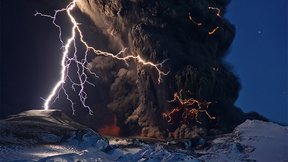
Shock waves in outflow gases could regulate ‘volcano lightning’
Volcanic eruptions spew lava, rock and ash into the air. When fragments of these materials mix and collide in the outflow, they can create an electric potential large enough to generate lightning. New research by Lawrence Livermore National Laboratory (LLNL) scientists and collaborators discovered that standing shock waves in the supersonic outflow of gases prevent…

Come on in, the water is superionic
The interiors of Uranus and Neptune each contain about 50,000 times the amount of water in Earth’s oceans, and a form of water known as superionic water is believed to be stable at depths greater than approximately one-third of the radius of these ice giants. Superionic water is a phase of H2O where hydrogen atoms become liquid-like while oxygen atoms remain solid-like on…
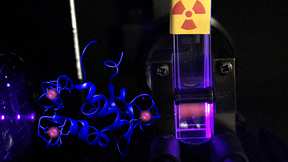
Nuclear waste interaction in the environment may be more complicated than once thought
Lawrence Livermore National Laboratory (LLNL) scientists and collaborators have proposed a new mechanism by which nuclear waste could spread in the environment. The new findings, which involve researchers at Penn State and Harvard Medical School, have implications for nuclear waste management and environmental chemistry. The research is published in the Journal of the…

What if just one airborne particle was enough to infect you?
For some diseases, exposure to just a single airborne particle containing virus, bacteria or fungi can be infectious. When this happens, understanding and predicting airborne disease spread can be a whole lot easier. That’s the result of a new study by a Lawrence Livermore National Laboratory (LLNL) scientist who developed a new theory of airborne infectious disease spread…
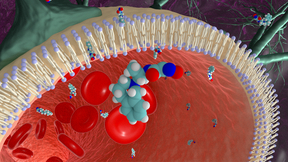
Lawrence Livermore develops promising antidote for nerve agent exposure
Scientists at Lawrence Livermore National Laboratory (LLNL) have developed a new, versatile antidote to counteract exposure to nerve agent poisoning. The work, appearing in the journal Scientific Reports, was the result of a highly iterative process built in collaboration between LLNL’s Global Security Directorate, its Forensic Science Center and the U.S. Army Medical…
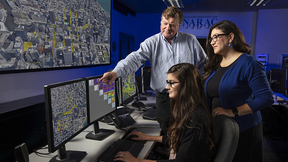
NARAC at forefront in a post-9/11 world
Editor’s note: The following is part of a series of articles looking back at the Lab's response immediately following the Sept. 11 attacks and our contributions since that day 20 years ago. From keeping Americans safe at national events to assisting with international disasters, Lawrence Livermore National Laboratory’s (LLNL) National Atmospheric Release Advisory Center …

American Meteorological Society to present Zelinka with Henry G. Houghton Award
The Council of the American Meteorological Society (AMS) has selected atmospheric scientist Mark Zelinka of Lawrence Livermore National Laboratory (LLNL) to receive the Henry G. Houghton Award. Zelinka was cited by AMS for “innovative advances in understanding the critical involvement of clouds to achieve a better understanding of climate interactions.” According to AMS,…


